How AI Is Reshaping the Workday
The familiar 9-to-5 framework is increasingly out of step with how knowledge work actually gets done. Organizations pursuing AI-driven future-of-work strategies are shifting from rigid, time-based structures to flexible, asynchronous, and results-oriented arrangements. This isn't just a workplace perk—it's a deliberate response to the shortcomings of clock-based work in a global, always-connected economy.
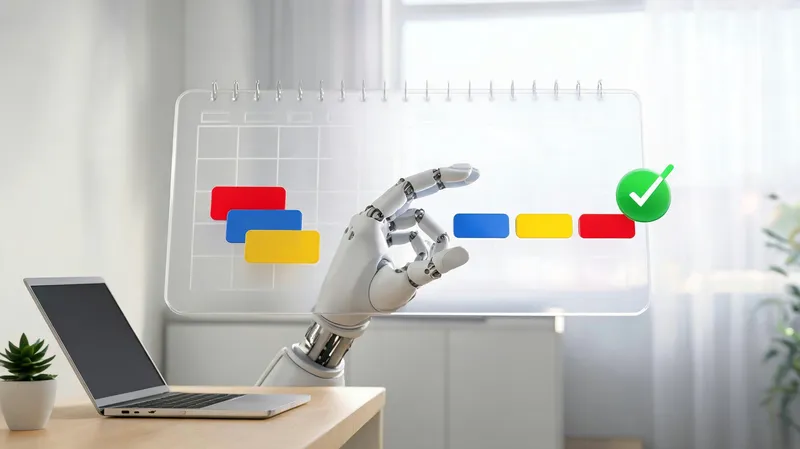
At the center of this change are AI-powered scheduling and asynchronous collaboration platforms. These systems examine individual productivity rhythms, meeting burdens, and task demands to suggest ideal working hours. Platforms such as Clockwise and Reclaim.ai, for instance, employ AI to automatically reserve deep work blocks, move lower-priority meetings, and safeguard focus time. A 2023 Asana study found that knowledge workers devote only 27% of their time to core skills, with coordination and busywork consuming the remainder. AI scheduling has the potential to recover a meaningful share of that lost time.
Fully remote companies are putting these ideas into practice. GitLab, which operates entirely remotely, has adopted asynchronous work supported by AI. Its team members across 65 countries rely on AI-driven documentation and handoff tools to collaborate without real-time meetings, yielding a 30% reduction in meeting time and a measurable rise in deep work hours. Automattic, the company behind WordPress, similarly uses AI to align work hours with individual productivity peaks, letting employees begin and end their days when they are most effective.
The move from hours logged to outcomes delivered is just as significant. AI-driven performance metrics now emphasize results—code shipped, customer issues resolved, revenue generated—rather than physical presence. This outcome-focused approach has been linked to higher employee satisfaction and retention. A 2024 Gallup report found that employees in AI-augmented flexible work environments are 22% more likely to report high job satisfaction and 18% less likely to leave their jobs. By separating work from fixed schedules, AI makes room for a more personalized and humane workday.
Taming the Attention Economy with AI

Human attention is the most scarce resource in the attention economy. Knowledge workers face a constant barrage of emails, instant messages, social media alerts, and an unending flow of information. The cost of context switching is enormous: research from the University of California, Irvine, shows that refocusing after a distraction takes an average of 23 minutes and 15 seconds. AI provides a potent countermeasure by filtering digital noise and acting as a prioritization engine for tasks.
AI email and message triage systems, including Superhuman and SaneBox, apply machine learning to sort, rank, and even draft replies to incoming communications. By surfacing only what genuinely matters, these tools reduce cognitive load. A 2023 McKinsey study found that AI-powered email triage can save knowledge workers up to 2.5 hours per week. AI assistants such as Microsoft Copilot and Google Duet AI can likewise summarize lengthy email threads, pull out action items, and schedule follow-ups automatically.
Beyond filtering, AI-driven task prioritization and focus management tools help individuals and teams connect daily actions to strategic goals. Motion and Reclaim.ai, for example, use AI to construct dynamic schedules that elevate high-impact tasks, block distracting apps, and set aside deep work sessions. A 2024 trial at a Fortune 500 tech company showed a 35% productivity increase among knowledge workers using AI-driven prioritization. The AI functions as a proactive coach, making sure the most important work happens first.
Organizations are also turning to AI to address meeting overload. Tools like x.ai and CalendarHero automate scheduling, while AI meeting assistants such as Otter.ai and Fireflies.ai transcribe calls, capture decisions, and assign action items. This cuts down on follow-up meetings and directs attention toward execution rather than coordination. In the attention economy, AI is more than a convenience—it is essential for protecting human focus.
Skills and Roles for AI-Assisted Time Management
As AI assumes routine scheduling and prioritization, the skills that matter most are changing. Critical thinking, emotional intelligence, and AI literacy are becoming vital for professionals who want to use AI to manage time and attention better. These human capabilities complement AI tools, helping individuals interpret AI recommendations, make ethical choices, and encourage collaboration.
Frameworks for AI-augmented work, such as the World Economic Forum's Future of Jobs Report 2023, identify analytical thinking, creative problem-solving, and emotional intelligence as top skills for 2025 and beyond. An AI productivity tool might propose a schedule, for instance, but a person must decide whether a client call or a team brainstorming session takes priority based on emotional and strategic context. AI literacy—knowing what AI can and cannot do—is equally important to prevent over-reliance and misuse.
New job roles are appearing to connect AI tools with human workflows. The AI productivity coach helps teams get the most from AI scheduling and prioritization tools, while the attention management specialist designs workflows that reduce distractions and increase focus. Job market data from LinkedIn shows a 150% increase in postings for roles related to AI-human workflow optimization between 2022 and 2024. Companies such as IBM and Accenture have established internal roles for AI productivity coaches to improve team effectiveness.
Case studies show the impact. At a leading software firm, an AI productivity coach introduced AI-driven focus blocks and asynchronous communication guidelines, producing a 40% reduction in internal meetings and a 25% increase in on-time project delivery. The coach also trained employees in AI literacy, enabling them to tailor their AI assistants to their personal peak productivity. These roles are not about managing people—they are about managing attention and technology in harmony.
Conclusion
AI is doing more than automating tasks; it is fundamentally reshaping work by redefining hours, prioritizing attention, and fostering new skills. In the AI future of work, rigid 9-to-5 schedules give way to flexible, outcome-based workdays optimized by AI. The attention economy, once a source of overwhelm, is being tamed by AI-driven filters and prioritization tools that protect human focus. And as AI takes over routine coordination, new human skills and roles emerge to ensure that technology serves people, not the other way around.
The significance of this shift cannot be overstated. By mitigating the attention crisis, AI can improve well-being, productivity, and job satisfaction. The future outlook is one of truly personalized work experiences, where AI optimizes time and attention for both individual and organizational success. As we embrace this future, the question is not whether AI will change work, but how we will shape it to be more human-centric.