Introduction
The software world has spent years being told that code is consuming every industry. A harder question now arises: what does the field look like once its own products start revising themselves? Requirements gathering, architecture, implementation, testing, release, and upkeep—the familiar sequence—are under pressure from machine learning, new ways of interacting with computers, and computing substrates that did not exist when that sequence was codified. Four mutually reinforcing shifts stand out for the coming decade: systems that improve themselves, plain-language programming, quantum and edge computing, and collaboration between people and AI. Each is examined below with concrete illustrations and practical takeaways for engineers, researchers, and technology leaders.
1. Systems That Learn and Improve on Their Own
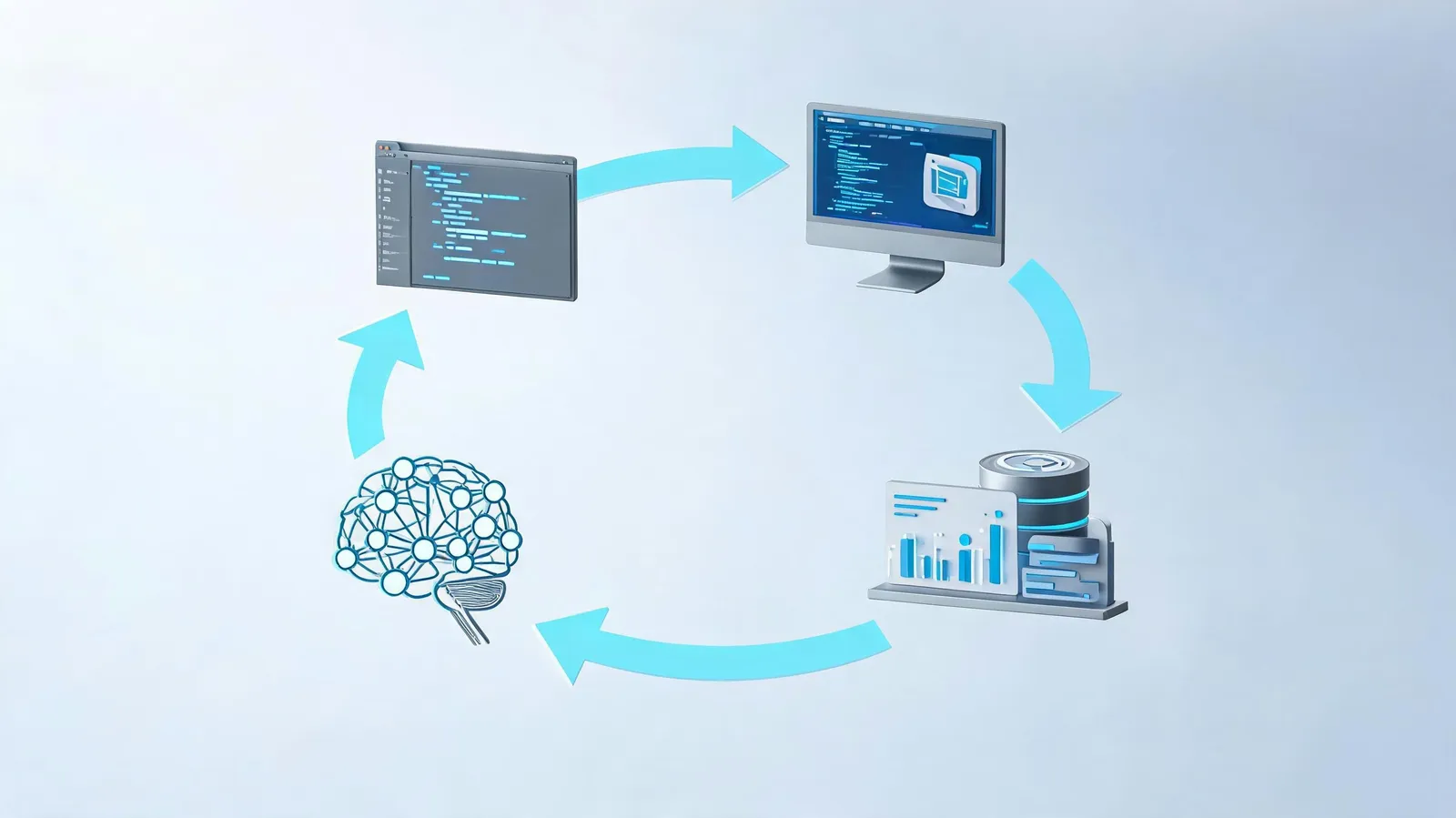
Instead of fixed codebases, self-improving systems behave like evolving organisms. They gather operational data, retrain their models, and revise their own decision logic while running in production—lowering the burden of manual upkeep and allowing near-continuous adaptation.
1.1 Pipelines for Ongoing Learning
Ongoing-learning pipelines fold MLOps discipline into the flow so that models and business rules are refreshed in near real time. Netflix, for instance, applies online learning to tailor recommendations, and self-healing infrastructure in cloud environments can automatically revert a bad release. A 2024 Gartner report found that organizations running such pipelines cut downtime by 40% and maintenance spending by 30%.
1.2 Architectures That Adapt at Runtime
Self-adaptive designs use feedback from live operation to tune performance. Google's Borg applies reinforcement learning to resource allocation, raising cluster utilization by 20%. Azure Autoscale from Microsoft similarly scales capacity to match demand patterns, lowering customer costs. Both illustrate software that evolves with little human steering.
2. Plain Language as the Main Way to Build Software
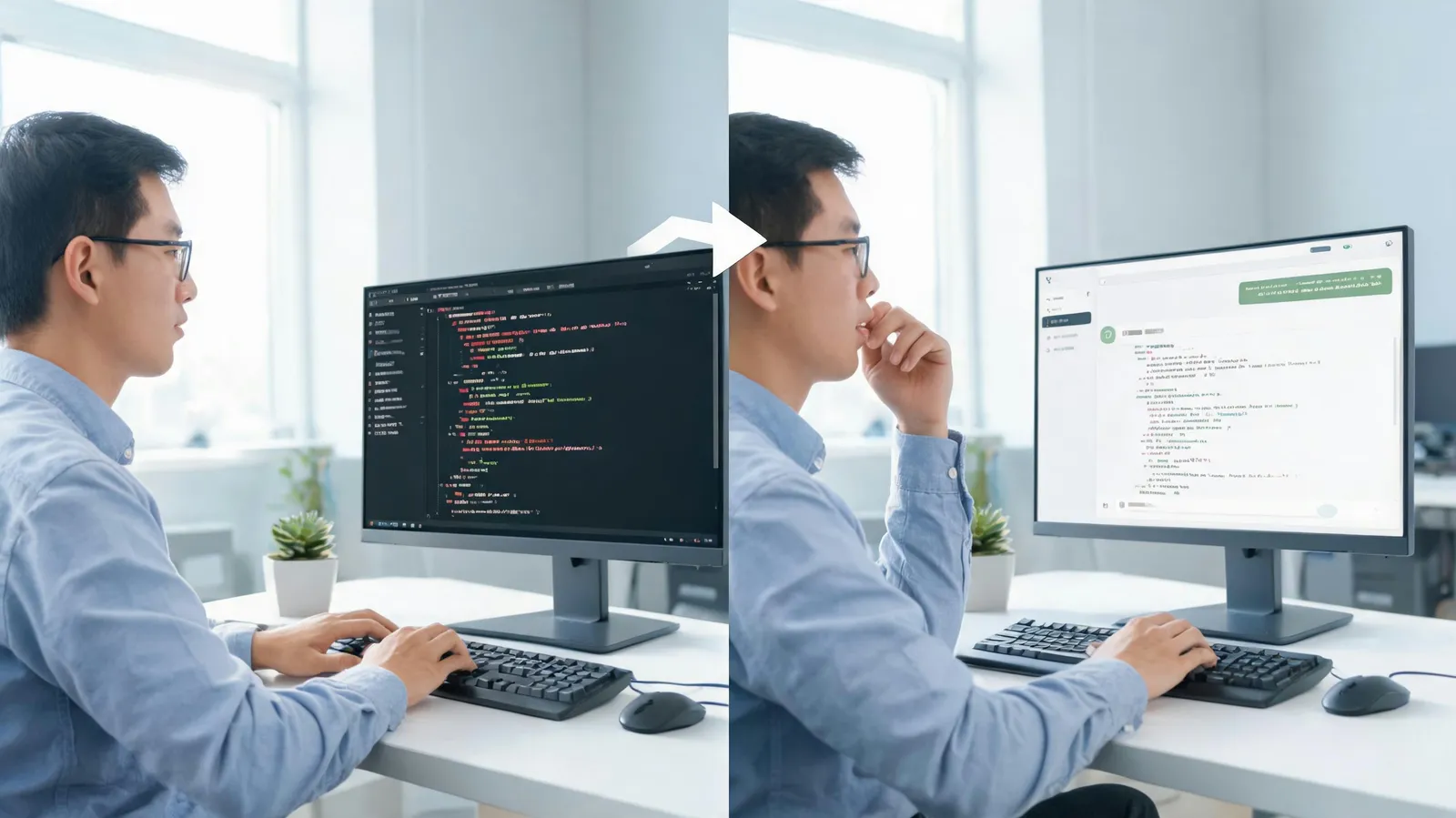
Describing software in ordinary language—and having it built and operated that way—is becoming mainstream. Large language models such as GPT-4 and Codex are changing how code gets written, moving attention away from syntax and toward stated intent.
2.1 Language Models as Generators and Assistants
GitHub Copilot and ChatGPT illustrate the productivity upside. A 2023 GitHub study reported that developers working with Copilot finished tasks 55% faster. Such assistants propose snippets, produce boilerplate, and help debug, freeing engineers for higher-level design work.
2.2 Building by Conversation and Prompt
With conversational programming, a user states what a feature should do in everyday English and the system turns that description into code. Platforms such as Bubble and Retool let people without engineering backgrounds assemble applications, and OpenAI research indicates that translation from natural language to code reaches 85% accuracy on simple tasks. The effect is to widen who can create software, letting domain specialists automate their own workflows without deep programming expertise.
3. What Quantum and Edge Computing Mean for AI Development
By supplying far greater compute and the ability to process data where it is generated, quantum and edge computing stand to alter AI development workflows substantially.
3.1 Quantum Machines for Optimization and Heavy Training
Certain optimization problems can be solved exponentially faster on quantum hardware than on classical machines. Quantum annealing, for example, has been applied to training large neural networks, with the prospect of cutting training from weeks to hours. Today's quantum systems still face limits from qubit coherence and error rates, which is why hybrid setups pairing quantum and classical resources are common.
3.2 Edge Computing for Inference in Real Time
Running AI inference at the edge, near the data source, supports decisions in the moment. Autonomous vehicles use edge AI to process sensor input locally and avoid latency, and AR/VR systems rely on it for immersive experiences without lag. A 2024 IDC report projected that by 2026, 75% of data generated by enterprises will be processed at the edge, which lowers bandwidth costs and strengthens privacy.
4. How People and AI Will Work Together Over the Long Run
Replacement is not the likely outcome; collaboration is. As AI capabilities grow, engineering roles will shift toward creativity, ethical judgment, and oversight.
4.1 From Instrument to Partner
AI is moving from tool to teammate. Research from Stanford HAI shows human-AI teams beating humans working alone on complex problem-solving. AI can propose architectural options, flag likely bugs, and draft documentation—functioning as a collaborator that is always available.
4.2 New Roles: Curation and Ethics Replace Routine Coding
With AI taking on routine implementation, engineers will spend more time reviewing AI-produced code, checking ethical compliance, and designing systems. Titles such as AI Ethicist, Prompt Engineer, and AI Auditor are emerging. The World Economic Forum projects that 50% of all employees will need reskilling by 2025, and software engineers are prioritizing AI literacy and ethical reasoning among those skills.
Conclusion
Four reinforcing forces are steering the direction of software engineering: systems that learn and adapt, plain-language interfaces that widen participation, quantum and edge platforms that reset performance expectations, and human-AI teamwork that extends what people can accomplish. Together they point toward development that is more adaptive, more efficient, and more accessible. Engineers who thrive will commit to ongoing learning, weigh ethical questions seriously, and build new competencies. This is only the opening phase—those who adjust will shape what comes next.