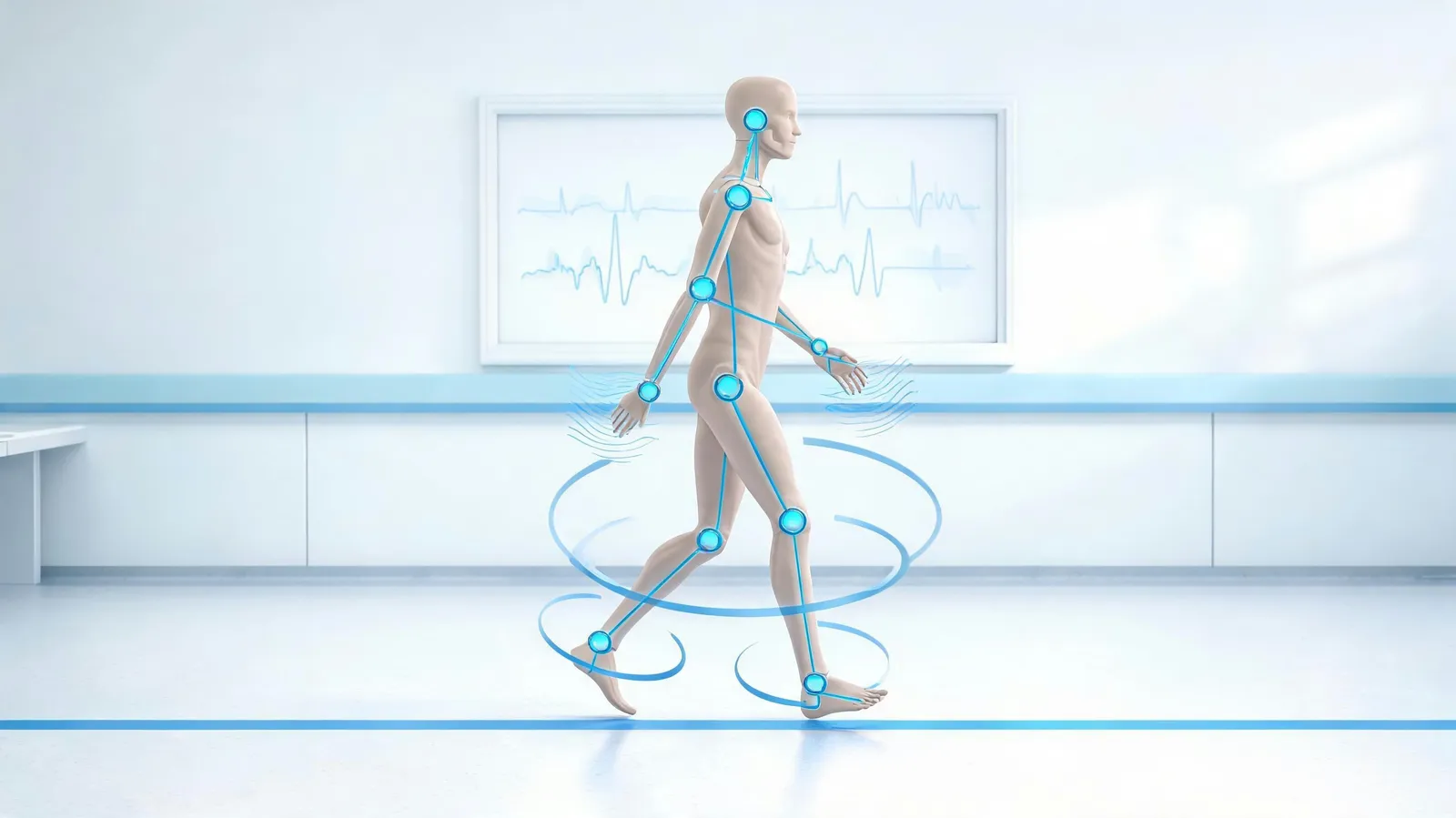
AI-Driven Gait Analysis in Stroke and Parkinson's Rehabilitation
Two of the most common neurological causes of walking difficulty are stroke and Parkinson's disease. Approximately 800,000 individuals in the United States experience a stroke each year, while more than 1 million Americans live with Parkinson's disease. Both conditions impair mobility, elevate fall risk, and reduce independence. Conventional gait evaluation depends on subjective clinical observation and occasional assessments, which miss the day-to-day variability and subtle changes that matter for rehabilitation.
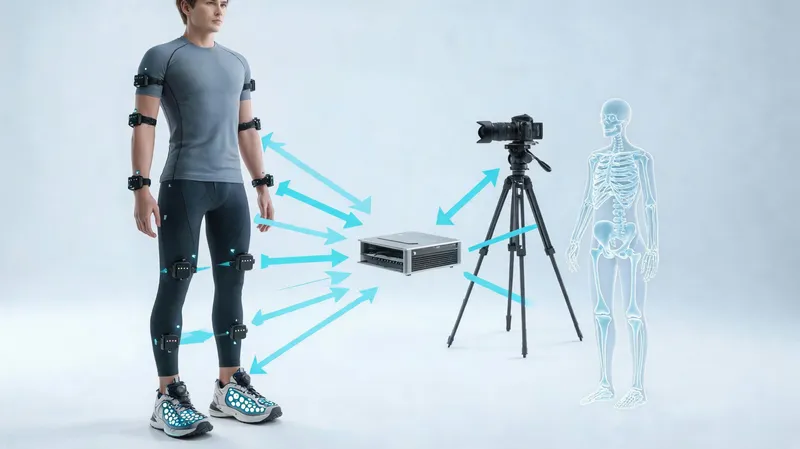
AI-based gait analysis represents a significant departure from this approach. Wearable sensors, cameras, and machine learning models allow objective measurement of gait abnormalities in stroke survivors. For instance, AI can precisely identify asymmetries in step length, swing time, and joint angles. Research indicates that AI-guided feedback, by delivering real-time corrections, improves motor recovery and is associated with a 30% decrease in fall risk among stroke survivors. In Parkinson's disease, AI analyzes sensor data to forecast motor fluctuations and freezing of gait, which can inform personalized medication scheduling. A case study from the University of Rochester found that AI predicted 'on' and 'off' periods with 90% accuracy, enabling patients to adjust levodopa intake dynamically.
These developments have moved beyond theory. Companies such as GaitUp and BioSensics have produced FDA-cleared wearable systems that deliver clinical-grade gait metrics. In post-stroke rehabilitation, AI algorithms process data from inertial measurement units (IMUs) worn on the ankles and lower back, giving therapists actionable insights. This setup supports remote monitoring, so patients can continue therapy at home while clinicians follow progress through secure dashboards.
Remote Monitoring of Home-Based Physical Therapy Adherence and Quality
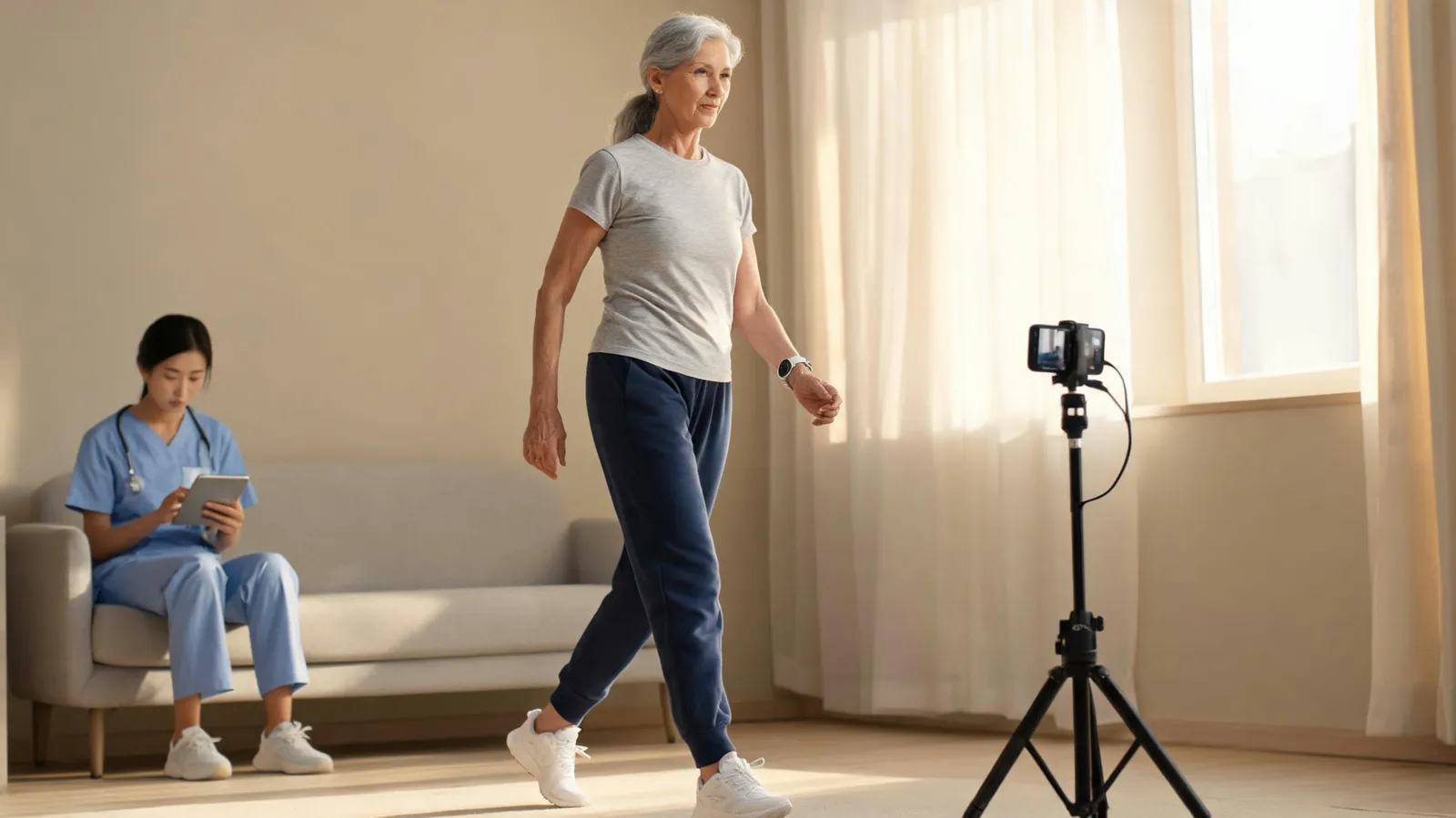
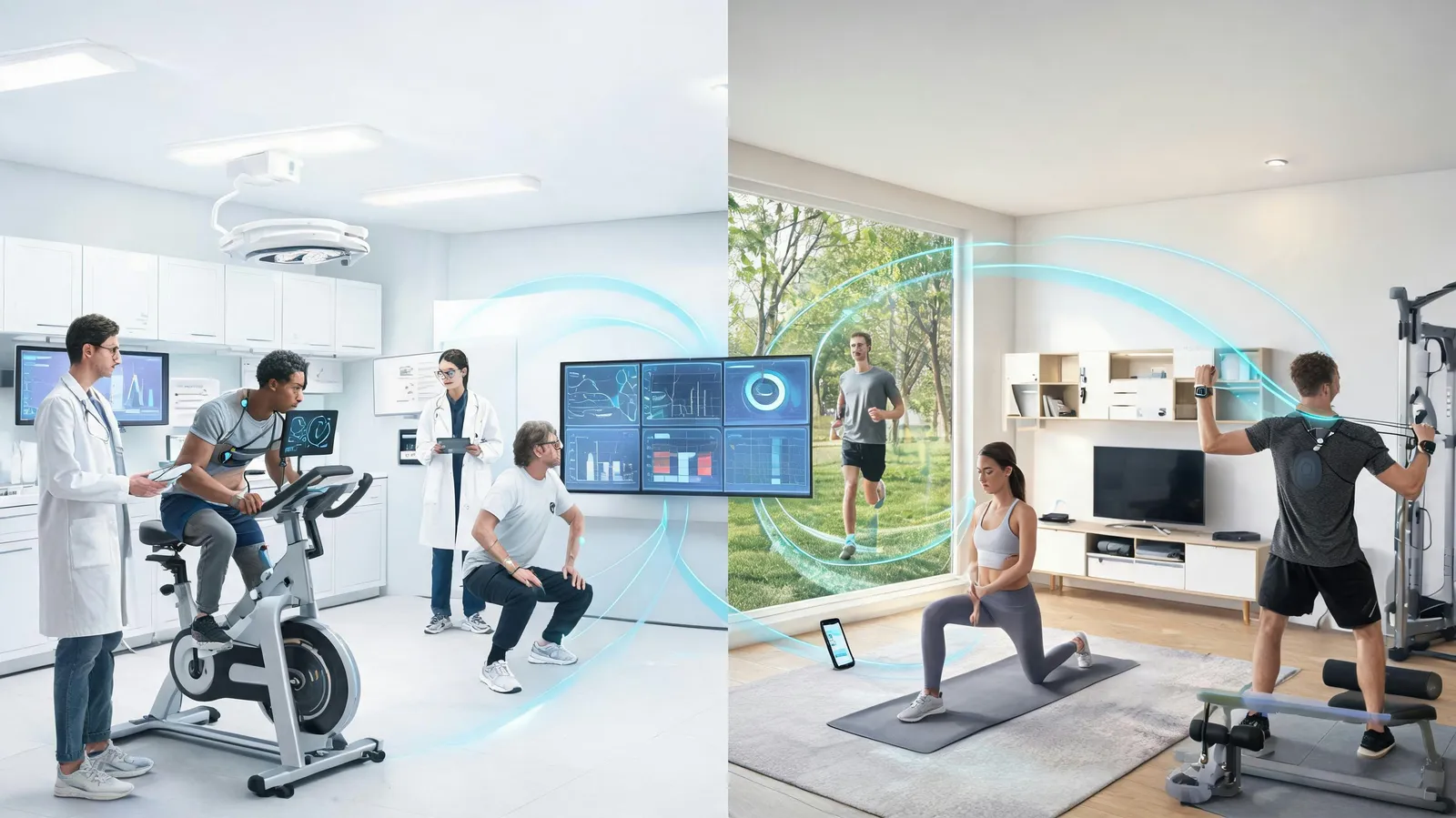
A major obstacle in rehabilitation is ensuring that patients perform prescribed exercises correctly and consistently outside the clinic. Non-adherence to home-based physical therapy can exceed 50%, resulting in worse outcomes and higher healthcare costs. AI gait analysis, when paired with wearable sensors and smartphone cameras, is beginning to change this situation.
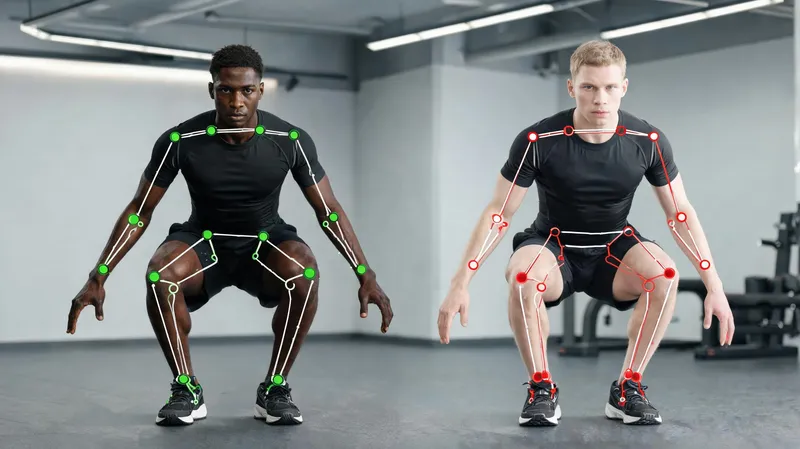
Wearable devices—smartwatches and fitness trackers with accelerometers and gyroscopes—can continuously monitor gait throughout daily activities. AI algorithms then process these data to evaluate adherence, movement quality, and progress. For example, a study in the Journal of NeuroEngineering and Rehabilitation reported that remote monitoring raised therapy adherence by 40% and improved functional outcomes in stroke patients. Smartphone cameras can also record gait videos, and AI pose estimation tools such as OpenPose analyze joint angles to detect improper exercise form in real time, giving patients immediate feedback.
Tele-rehabilitation platforms that incorporate AI gait feedback are gaining traction. These platforms reduce costs by decreasing in-person visits and improve access for rural populations. A Mayo Clinic case study found that rural patients using a tele-rehabilitation system with AI gait analysis achieved outcomes comparable to those receiving in-clinic therapy, with a 25% reduction in healthcare costs. In addition, AI can alert clinicians to worsening gait patterns, allowing for timely interventions.
Detecting Gait Deviations in Children and Older Adults
Identifying gait abnormalities early is essential for children with developmental disorders and for preventing falls in older adults. AI gait analysis is proving valuable in both areas.
In pediatric care, AI models can detect subtle gait deviations linked to cerebral palsy, muscular dystrophy, and other conditions. A study in Gait & Posture reported that an AI system achieved 92% sensitivity and 88% specificity in detecting cerebral palsy from gait data. Early intervention guided by AI can improve long-term outcomes, such as reducing contractures and enhancing mobility. Pressure-sensitive mats and wearable sensors are used in pediatric clinics to collect gait data, and AI algorithms analyze it to flag deviations from typical development.
For older adults, fall risk prediction is a critical application. Falls are the leading cause of injury-related deaths among adults over 65. AI gait analysis can predict fall risk by analyzing parameters such as gait variability, stride time, and postural sway. A study in Nature Aging showed that AI gait monitoring reduced falls by 35% in a senior living community. Smart homes equipped with ambient sensors and wearable devices can continuously assess gait and alert caregivers when abnormalities are detected. This proactive approach enables timely interventions, such as physical therapy or medication adjustments, to prevent falls.
Regulatory Pathways for AI Gait Tools as Medical Devices
As AI gait analysis tools move from research into clinical practice, regulatory approval becomes essential. In the United States, the FDA regulates AI-based medical devices through the Software as a Medical Device (SaMD) framework. The FDA's predetermined change control plan permits modifications to AI algorithms without a new 510(k) clearance, as long as the changes fall within a pre-specified scope. Examples of cleared AI gait analysis devices include GaitWatch and WalkAI, which have received 510(k) clearance for gait analysis in rehabilitation.
In the European Union, the Medical Device Regulation (MDR) sets stricter requirements for AI/ML-based devices, including clinical evaluation and post-market surveillance. Key considerations for clinical validation include bias mitigation, generalizability across diverse populations, and real-world evidence. A successful regulatory submission for a gait analysis tool typically involves multi-site clinical trials demonstrating accuracy and clinical benefit. For instance, a recent submission by NeuroGait included data from 500 patients across five sites, showing a 20% improvement in rehabilitation outcomes.
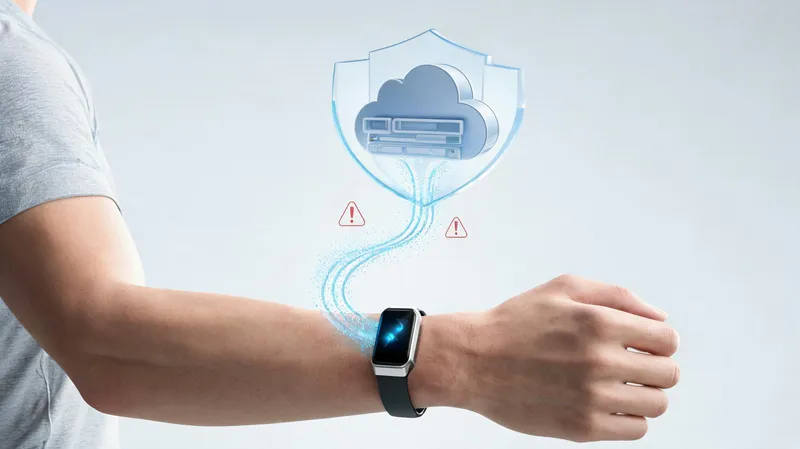
Challenges remain, such as ensuring data privacy and addressing algorithmic bias. The FDA and EMA are actively developing guidance to streamline the approval process while ensuring safety and efficacy. For developers, early engagement with regulators and adherence to quality management systems (e.g., ISO 13485) are critical.
Conclusion
AI-powered gait analysis is transforming rehabilitation for stroke, Parkinson's, pediatric, and aging populations. By providing objective, continuous, and remote monitoring, it enhances therapy adherence, enables early detection of gait deviations, and predicts fall risk. The regulatory landscape is evolving to accommodate these innovations, with clear pathways for approval. As AI integrates with telemedicine, wearables, and predictive analytics, the future of personalized rehabilitation looks promising. Healthcare professionals and technology enthusiasts should embrace this technology to improve patient outcomes, reduce costs, and increase access to care.