
Making Use of Leftovers and In-Season Produce Through AI Recipes
When leftovers are on hand, AI algorithms can work out what is available and propose dishes that consume it efficiently. In one illustration, a platform scans the contents of a refrigerator—through manual entry or a connection to smart appliances—and produces a vegetable stir-fry recipe built around spinach that is starting to wilt, cooked rice left over from an earlier meal, and half an onion. A 2024 case study from the Environmental Protection Agency (EPA) reported that households following AI meal suggestions cut food waste by 30% relative to households that planned meals in the traditional way. Because less organic material breaks down without oxygen in landfills, that reduction translates directly into lower methane emissions.
Prioritizing ingredients that are in season lessens dependence on produce grown out of season, which in turn lowers the emissions tied to transport and storage. The U.S. Department of Agriculture (USDA) notes that moving out-of-season produce can generate as much as 10 times more CO2e per pound than locally grown seasonal items. Platforms such as Savormetrics and Kitche draw on seasonal calendars and data on local availability to propose dishes that match what can be harvested at that moment. A winter recipe, for example, might lean on storage crops such as squash and root vegetables, whereas a summer recipe would put tomatoes and berries in the foreground. Beyond trimming emissions, this approach gives local farmers a boost and cuts the energy used in cold chains.
Weighing Carbon Impact When Generating Meals
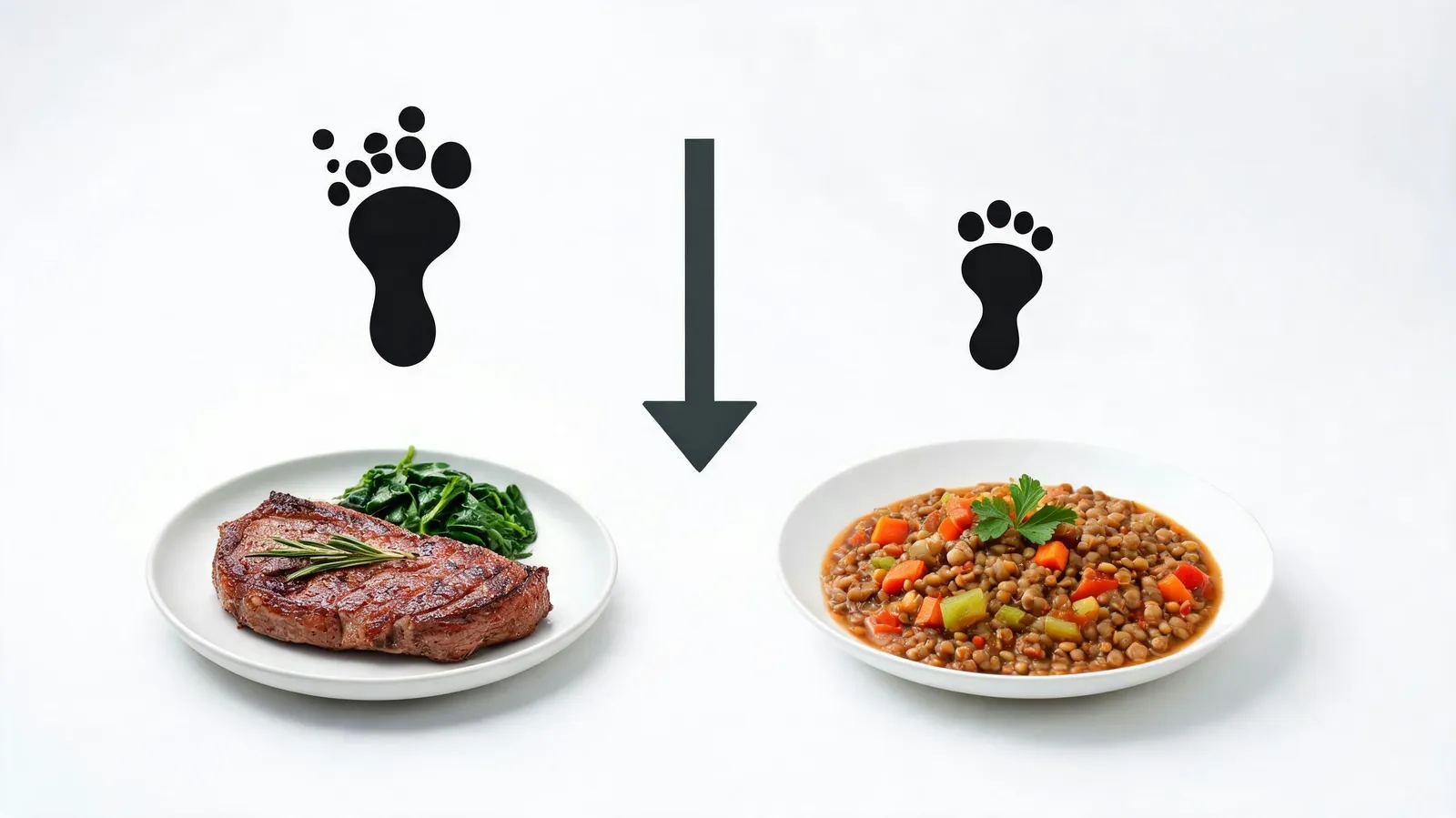
AI can assess the environmental burden of an ingredient across the whole supply chain, from production to consumption. Figures from the Food and Agriculture Organization (FAO) indicate that beef production releases roughly 60 kg CO2e per kg of protein, compared with under 1 kg CO2e per kg for legumes. Tools including CarbonCloud and My Emissions supply real-time carbon scores for thousands of ingredients, which lets recipe generators propose lower-carbon swaps. According to a 2023 study published in Nature Food, replacing beef with lentils in a chili recipe can bring the meal’s carbon footprint down by 40% while keeping protein content and flavor intact.
Optimization algorithms weigh nutrition, taste, and carbon impact together in order to produce sustainable meal plans. These algorithms rely on multi-objective optimization, balancing considerations such as macronutrient distribution, individual preferences, cost, and environmental effects. In a 2024 pilot in Seattle, Washington, 500 households tested an AI meal planner; over three months, the carbon footprint of their meals fell by 40%, and 85% of participants said they were satisfied with taste and nutrition. Participants remarked on the convenience of weekly low-carbon recipes that automatically folded in leftovers and seasonal produce. The platform also adjusted its suggestions as it learned from user feedback.
Connecting AI Recipe Platforms With Regional Food Systems
AI platforms can link up with databases of local farms and with farmers' markets so that recipe suggestions reflect the produce available nearby. Apps such as FarmDrop and LocalHarvest already connect consumers with nearby farms, and AI can strengthen that link by drawing on real-time inventory data. If a local farm, for instance, has more zucchini than it can sell, the AI can produce several recipes built around zucchini—zoodles among them, as well as baked goods—and send notifications to users in the area. This shortens food miles (the distance food travels from farm to plate) and supports local economies. A 2023 case study in Portland, Oregon, found that a city-wide AI recipe initiative raised local produce consumption by 25% and cut transportation emissions by 18%.
Buying from nearby sources lowers transport emissions and strengthens community resilience. The Leopold Center for Sustainable Agriculture reports that locally sourced food travels an average of 27 miles, against 1,500 miles for conventional produce. AI platforms can optimize further by coordinating shared delivery routes or by suggesting pickup at farmers' markets. During the COVID-19 pandemic, local food systems proved more resilient than global supply chains, and AI can help extend that resilience. An AI platform in Austin, Texas, for example, connected 200 small farms with 5,000 households, cutting on-farm food waste by 35% and lowering the grocery carbon footprints of those households by 20%.
Conclusion
Recipe generation powered by AI is a practical and scalable response to the global food waste problem. By making better use of leftovers, favoring seasonal ingredients, calculating carbon footprints, and connecting with local food systems, these platforms can cut household food waste by 30% and reduce meal carbon footprints by as much as 40%. As AI becomes more closely tied to smart kitchen appliances and to real-time supply chain data, a future of zero-waste cooking becomes conceivable. The technology is available now—whether it gets adopted depends on individual choices and policy support. For industry professionals, technology enthusiasts, and sustainability advocates, the takeaway is straightforward: AI on the plate is more than a passing trend; it is a necessary ingredient for a sustainable food future.